
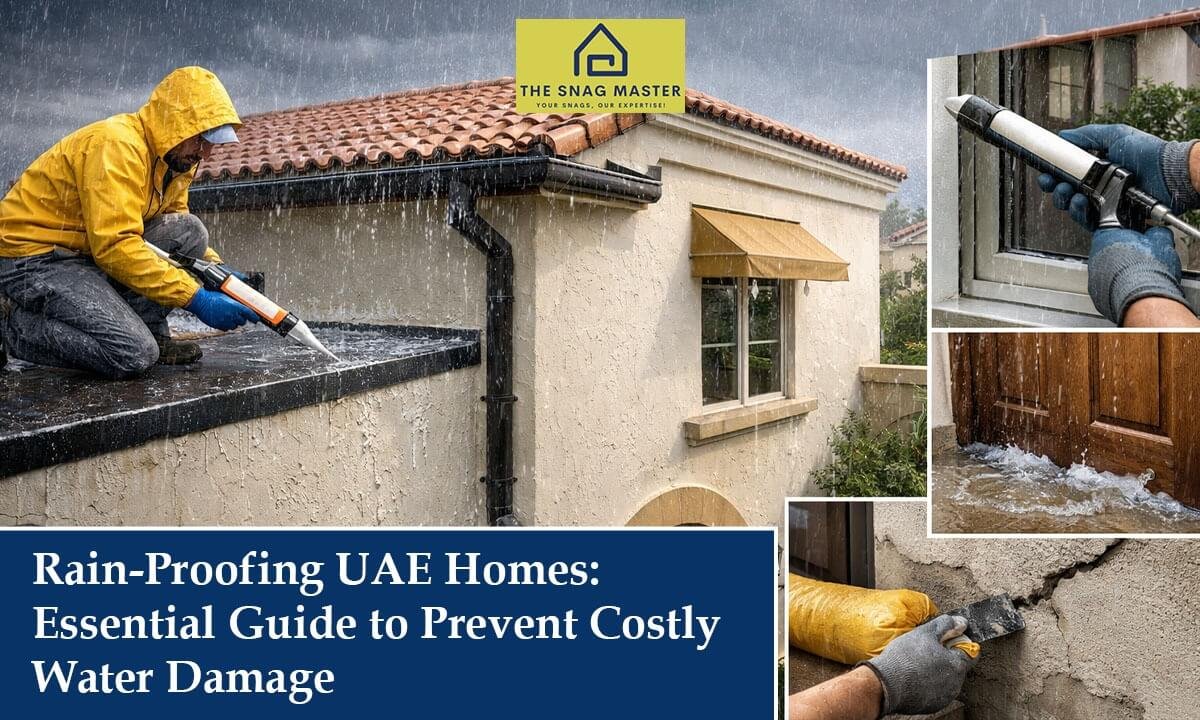
The UAE is known for its dry desert climate – but when it rains, it can be sudden, intense, and highly damaging. In recent years, heavy rainfall has caught many homeowners off guard, leading to flooding, water leakage, and unexpected repair costs.
The truth is, most UAE homes are not fully prepared for heavy rain.
Whether you live in a villa or an apartment, taking proactive steps toward rain-proofing your property can save you from major structural issues and financial stress. In this guide, we’ll walk you through expert tips to protect your home and ensure peace of mind during the rainy season.
Why Rain-Proofing UAE Homes Is Crucial
Rain in the UAE may be rare, but recent events have proven how destructive it can be. The April 2024 storms were a major wake-up call, with thousands of villas and apartments experiencing flooding, water ingress, and structural damage within just a few hours.
As climate patterns continue to shift, rainfall in the UAE is becoming less predictable but far more intense. This means homes that once seemed unaffected are now at real risk – whether it’s a villa, townhouse, or apartment.
Here’s why rain-proofing is more important than ever:
- Sudden, heavy downpours can quickly overwhelm existing drainage systems
- Even minor waterproofing issues can lead to rapid water ingress and interior damage
- Structural weaknesses are exposed instantly under extreme weather conditions
- The cost of repairs can escalate significantly if problems are not addressed early
Prevention costs only a fraction of repair. A simple inspection today can save tens of thousands of dirhams from future damage.
Top Rain-Proofing Tips for UAE Homes
1. Keep Gutters Clean and Functional
Gutters play a crucial role in directing rainwater away from your home. In the UAE, sand and debris can accumulate quickly, leading to blockages.
- Clean gutters regularly to prevent water pooling on the roof or near the foundation
- Remove sand and debris buildup—this requires frequent attention, not just annual cleaning.
- Ensure downspouts are angled away from your home to avoid water seepage
-
Inspect Your Roof for Damage
Your roof is your home’s primary shield against rain, and even small issues can lead to major leaks.
- Check for cracked tiles or missing sealant that allows water to enter
- Pay close attention to flat villa roofs, which are prone to water ponding
- Keep roof drains clear to prevent excess water buildup
Even a single blocked drain can hold hundreds of kilograms of standing water—putting serious stress on your structure.
-
Improve Drainage Around Your Property
Poor drainage can lead to water seeping into your foundation, causing long-term damage.
- Ensure the ground slopes away from your home, not toward it
- Install trench drains or French drains in flood-prone areas
- Prevent water from collecting near the base of your property
-
Secure Outdoor Furniture and Items
Heavy rain combined with strong winds can turn loose items into hazards.
- Move outdoor furniture, pots, and umbrellas indoors before rain
- Anchor larger items securely if they cannot be moved.
- Keep outdoor areas clear to reduce potential damage
-
Seal Windows and Doors Properly
Unsealed gaps are one of the most common entry points for rainwater.
- Use waterproof caulk to seal any gaps or cracks
- Replace worn weather stripping for better protection
- Regularly inspect frames to prevent leaks, mold, and interior damage
-
Trim Trees and Shrubs
Overgrown greenery can become dangerous during storms.
- Prune overhanging branches that could break and cause damage.
- Keep trees trimmed, especially those near roofs or boundary walls.
- Reduce the risk of falling debris during strong winds
-
Use sandbags for flood protection.
Homes in low-lying areas are more vulnerable to flooding.
- Place sandbags around doors, garages, and entry points
- Use them to redirect water flow away from your property
- Take extra precautions if your home is at ground level
-
Test Your Sump Pump
A sump pump can be a lifesaver during heavy rainfall—but only if it works properly.
- Run a test before the rainy season begins
- Ensure it drains water efficiently
- Keep a battery or generator backup ready in case of power outages
-
Prepare an Emergency Supply Kit
Being prepared can make a big difference during unexpected storms.
- Keep essentials like bottled water, food, and flashlights ready
- Include a first-aid kit and battery-powered radio
- Be aware of emergency contacts and evacuation routes
Be Prepared to Enjoy the Rain
Once your home is fully protected, rainfall doesn’t have to be stressful.
With the right preparation, rain becomes something to enjoy—not fear. A well-prepared home turns potential damage into peace of mind.
Apartments vs Villas: Different Rain Risks
Apartments
Apartment residents often assume they are safe from rain damage – but water can travel through buildings in unexpected ways.
Common Risks:
- Water can enter your unit through upper floors, shared plumbing lines, and facade cracks
- AC ducting is a common hidden entry point, where condensation mixed with rainwater can lead to mold inside the walls
- Balcony waterproofing failures are extremely common, allowing water to seep through slabs and appear as ceiling stains below
- In older buildings, elevator shafts and stairwells can flood, sometimes restricting access during heavy rain
Essential Checks for Apartment Residents:
Apartments may feel safer since you’re not on the top floor—but water doesn’t stay in one place. It can travel through structures, meaning a leak from the roof could show up several floors below.
- Make sure your balcony drain is clear, and water flows freely.
- Check ceiling corners near AC units and exterior walls for yellow or brown stains
- Press window frame seals – if they feel brittle or show gaps, reseal them immediately.
- Inspect under-sink cabinets in kitchens and bathrooms for dampness or soft wood
- Confirm with building management that roof drains have been cleaned before the rainy season
Staying proactive with these checks can help you catch early signs of water damage before they turn into costly repairs.
Villas
Villas in the UAE are more exposed to rain due to their structure and surrounding outdoor areas, making proper preparation essential.
Common Risks:
- Flat villa roofs can accumulate standing water if even one drain is blocked—adding hundreds of kilograms of excess load on the structure
- Improper garden grading can direct rainwater toward the house, increasing the risk of foundation seepage
- Boundary walls may weaken or crack due to pressure from waterlogged soil
- Villas with basements or lower ground floors are at the highest risk of flooding during heavy rain
Villa Rain-Proofing Checklist
- Check the roof edges and drainage outlets for cracks or blockages
- Look for white stains or bubbling paint on walls—these indicate moisture
- Test the ground floor windows for any water seepage
- Keep garden drains and overflow areas clean
- Inspect garage door seals, as garages flood easily
- Check wall joints and cracks where water can enter easily
Taking these proactive steps can significantly reduce the risk of structural damage and costly repairs during heavy rainfall.
Hidden Defects Rain Will Reveal
Rain acts like a natural stress test for your home – it quickly exposes hidden flaws and weak points that might go unnoticed in dry conditions, which a professional snagging inspection is meant to identify before they turn into costly problems.
Some common defects include:
- Waterproofing membrane failure
- Cracks in the external walls or facade
- Poor slope in balconies and bathrooms
- Loose or hollow exterior tiles
- Gaps in window sealing
These issues can escalate quickly if not addressed in time.
The Importance of Professional Inspection
While routine maintenance helps, a professional inspection offers a much deeper level of protection for your home.
A pre-rain inspection by a snagging specialist can uncover hidden issues in roofing, waterproofing, drainage, and window seals – problems that are often missed by the untrained eye.
This becomes especially important for newly handed-over properties, where construction defects may only appear during rainfall. For older homes, a detailed building condition audit can identify maintenance gaps early and help avoid costly emergency repairs later.
Early detection not only protects your property but also saves significant repair costs in the long run.
Final Thoughts
Rain in the UAE may be rare—but when it arrives, it can cause serious damage if your home isn’t prepared. Taking proactive measures like maintaining drainage systems, sealing entry points, and inspecting vulnerable areas can go a long way in protecting your property from costly repairs.
We are proud to be featured in The National News, where The Snag Master provided expert advice on safeguarding properties during adverse weather conditions. Our insights focused on identifying structural risks and ensuring compliance through thorough, professional inspections.
A well-prepared home doesn’t just withstand the rain—it remains safe, secure, and worry-free.
Don’t wait for the next storm to reveal hidden issues.
Book a professional inspection with The Snag Master today and ensure your home is fully protected before the rain arrives. Our expert snagging specialists identify problems early – saving you time, stress, and thousands in repair costs.
Stay prepared. Stay protected. Trust The Snag Master.